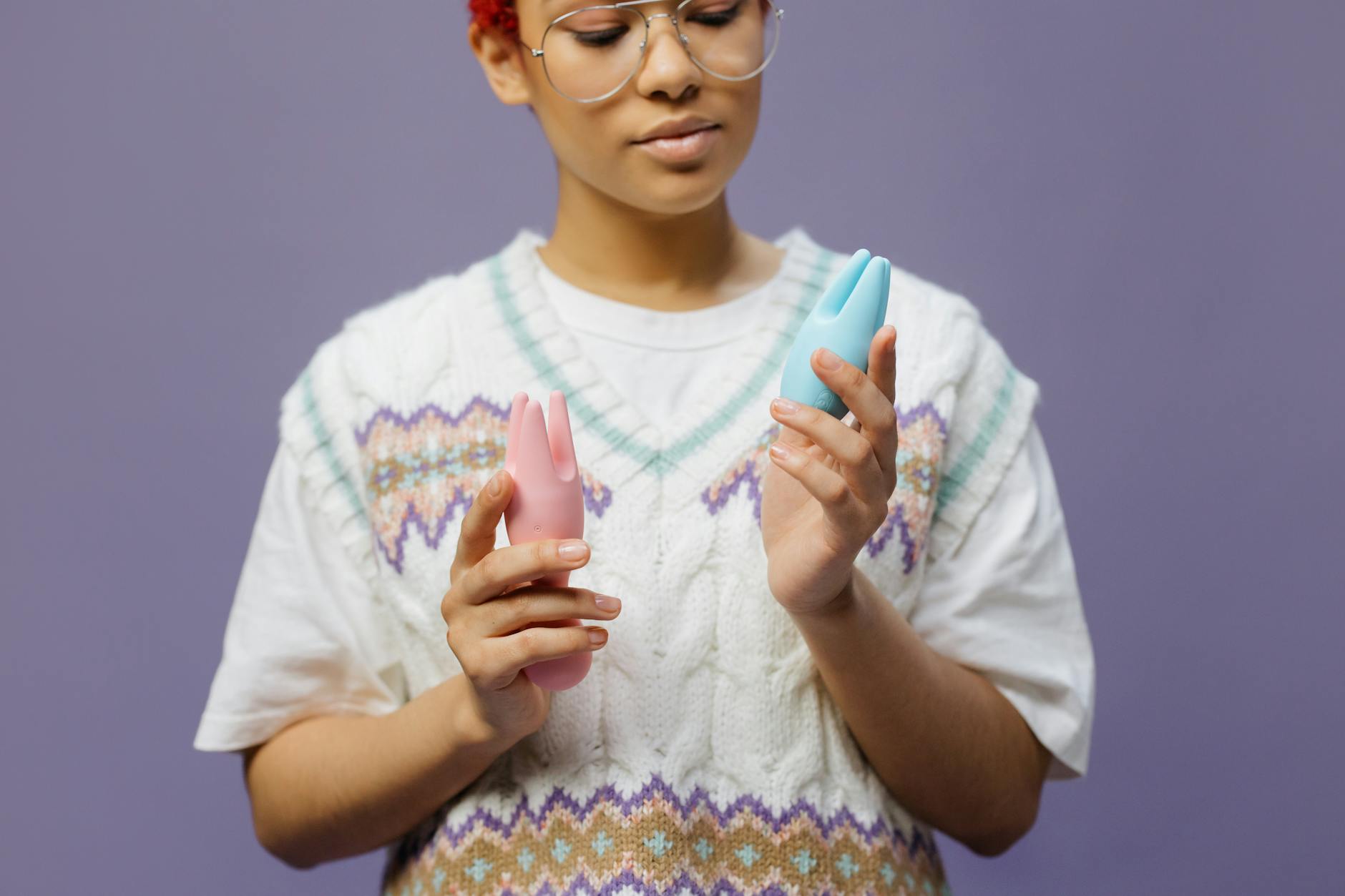
Let's start with what reactive arousal actually is
Honestly, reactive arousal gets lumped into "low libido" and that's where the confusion starts. You don't have low desire. You have desire that arrives differently. Instead of spontaneous arousal building on its own, your body responds to direct physical touch. Stimulation comes first. Wanting comes after.
This is neurologically normal. Studies on sexual response suggest that roughly 40-70% of people with vulvas have reactive rather than spontaneous arousal patterns. Which means if you're here, you're not broken. You're in the majority.
How reactive arousal changes what you need from a toy
Traditional vibrators assume you're already somewhat aroused when you turn them on. They're designed to intensify arousal that's already building. Lemon vibrators work fundamentally differently because they use suction rather than vibration. That matters for reactive arousal because suction engages the nervous system in a way that doesn't require pre-existing desire. It creates the sensation first, and the arousal follows.
The suction pattern of a lemon vibrator stimulates thousands of nerve endings without demanding that your body already know it wants pleasure. It's bottom-up instead of top-down. Your tissues respond, blood flow increases, and then your brain catches up with "oh, I'm into this." This sequence works better for reactive nervous systems.
Think of it as the difference between waiting for hunger to strike before cooking, versus smelling food cooking and then getting hungry. The trigger is external and sensory rather than internal and psychological.
Why this matters for your relationship to touch
If you've been told your whole life that you "should" feel like having sex before you do it, you've probably trained yourself to feel guilty about reactive arousal. That shame makes the reactive pattern worse. When you use a lemon clitoral vibrator from a place of curiosity instead of performance pressure, everything shifts.
You're not waiting for desire to appear. You're not trying to manufacture enthusiasm. You're literally just noticing what happens when your body gets consistent, gentle stimulation. That's it. That's the experiment.
Many of my clients with reactive arousal describe this as permission to stop performing arousal and start experiencing it. The Lem vibrator, for instance, is designed to be low-pressure and responsive to your body's signals rather than forcing an intensity level you're not ready for. You choose the pattern, you stay with it as long as it feels good, and you let sensation guide the experience instead of willpower.
How to set up your nervous system for success
Reactive arousal often goes hand in hand with a nervous system that needs a bit of runway to relax. Four things make an enormous difference here.
First, time and space. Plan to have 20-30 minutes where you're not checking your phone or listening for sounds. Your body can't shift into pleasure mode if it's half-monitoring responsibilities. Close the door. Silence your notifications. This isn't luxurious, it's neurological.
Second, no goal. I know that sounds obvious, but with reactive arousal, many people pick up the toy thinking "I need to have an orgasm in the next 15 minutes or this didn't work." That's pressure, and pressure shuts down the very responsiveness you're trying to cultivate. Instead, use lemon vibrators as a way to explore sensation. Some sessions will lead to orgasm. Some won't. Both are data, not failures.
Third, comfort positioning. You're going to be here for a while. Lie down in a position where you can relax your legs completely. Props matter. A pillow under your hips, a blanket nearby. Your nervous system is more likely to settle into pleasure when your body feels secure.
Fourth, minimal lubricant. Unlike traditional vibrators, lemon suction toys create their own moisture as blood flow increases. Use a small amount of water-based lube to start, but don't oversaturate. The suction works better with a light seal, and too much lube actually reduces sensation.
The first-time protocol: how to actually use a lemon vibrator with reactive arousal
Start with the lowest suction setting. Lower than you think. The goal isn't to feel intense stimulation right away. The goal is to feel something consistent enough that your nervous system goes "oh, this is happening" and relaxes into it.
Place the device against your clitoris. You're looking for that light seal where it feels like suction is happening, not like it's vacuuming your body. Breathe. Stay at level 1 for 2-3 minutes. Your body will likely start responding. Blood flow increases. Tissue swells slightly. Sensation intensifies naturally without you pushing.
After a few minutes, try level 2. Then 3. You're not racing through levels. You're letting your body meet each intensity and then deciding if you want more. This is the opposite of how traditional vibrators work.
Many people with reactive arousal report that the first orgasm (if it happens) comes surprisingly late in the session. That's not because something's wrong. It's because your nervous system needed time to recognize what was happening and transition into pleasure. That's normal. That's the pattern.
What to expect in the first weeks
Session one, you might not orgasm. That's completely fine. You're training your nervous system to recognize that touch equals possibility. Session two, you might feel more sensation because your body remembers. By week two or three, you'll likely notice arousal building faster and lasting longer.
One thing that often shifts is your sensitivity to your own desires outside the toy session. When you've given yourself permission to feel pleasure from touch, without judgment or performance pressure, that permission often bleeds into your daily life. You start noticing what you want more clearly.
Incorporating lemon vibrators into partnered sex
If you have a partner, the conversation is simple. "My arousal works differently. I need touch first, and then I want it more. Can we try using a toy together to see how that feels?" Many partners are relieved to have a clear roadmap instead of guessing what will work.
Some couples use the lemon vibrator alone first, and then with a partner present but not directly involved. Others integrate it directly. There's no "right" way. The only rule is that it stays pleasurable and pressure-free for you.
When to adjust your approach
If you're not seeing changes in arousal patterns after 4-5 sessions, a few things might help. Try different times of day. Some bodies respond better to touch in the morning when cortisol is lower. Try different settings on your lemon clitoral vibrator. Sometimes a pattern that feels boring on level 1 becomes your favorite on level 4. Try bringing in a partner or a different kind of touch simultaneously.
If pain appears, or if suction feels overwhelming, dial it back. Lower settings. Shorter sessions. Your body's job is to tell you what works.
Why lemon sexual toys work better for reactive patterns
Traditional vibrators assume you want intensity. Lemon adult toys assume you want sensation. The difference is crucial. Intensity without arousal feels weird and sometimes uncomfortable. Sensation, sustained gently and gradually, teaches your body that pleasure is available if you're patient with it.
The lem vibrator's design is built exactly for this. It mimics the sensation of oral sex, which many people with reactive arousal find easier to respond to than vibration. There's something about suction that feels less mechanical and more embodied.
The bigger picture
Reactive arousal isn't something to fix. It's something to understand and work with. Your body isn't broken for needing touch to spark desire. Your body is telling you what works. Lemon vibrators, used thoughtfully, are a way of listening to what your body needs instead of forcing it into someone else's pattern. That's not settling. That's clarity. And clarity makes pleasure so much more accessible.
People also ask
How long does it take for reactive arousal to respond to a lemon vibrator?
Most people notice some difference within 2-3 sessions. Arousal might build faster, or sensation might feel more intense. Significant changes in your arousal pattern typically take 3-4 weeks of regular use. That's how long it takes your nervous system to re-pattern. If you're not seeing any shift after a month, you might benefit from talking to a sex-positive therapist about whether something else is affecting your arousal (stress, medications, relationship dynamics). Lemon vibrators are powerful, but they're not magic wands.
Can reactive arousal be a sign of depression or a medical issue?
Reactive arousal is a normal variation in how bodies work, but a sudden shift from spontaneous to reactive arousal can sometimes signal underlying stuff worth exploring. That might be depression, thyroid issues, medication side effects, or relationship stress. If your arousal pattern has changed abruptly, mention it to your doctor. If you've always had reactive arousal, that's just your baseline and lemon vibrators work beautifully with it.
Is reactive arousal the same as asexuality?
No. Reactive arousal means you want sex or pleasure once you're touched. Asexuality typically means you don't experience sexual attraction or desire. They're completely different things. Someone with reactive arousal can absolutely have strong sexual desire once that touch begins. Asexual folks might have zero interest. They're not on the same spectrum.
Do lemon vibrators work the same way for reactive arousal as for spontaneous arousal?
Not exactly. For people with spontaneous arousal, lemon vibrators amplify desire that's already building. For reactive arousal, they create the initial spark. That means your protocol might look different. You might start at very low settings and build slowly, versus someone with spontaneous arousal who might jump to their favorite intensity level right away. Honor what your body needs.
What if my partner has spontaneous arousal and I have reactive arousal?
That's actually pretty common. You and your partner might warm up at different speeds. One solution is to spend 10-15 minutes on foreplay or solo touch with a lemon clitoral vibrator while your partner does whatever helps them get ready. That way you're both showing up aroused instead of one person waiting for the other. Some couples also find that using a lemon toy together during partnered sex keeps both people engaged at the same level. Read more on how lemon vibrators improve intimacy when partners have mismatched sex drives for specific strategies.
Will using a lemon vibrator regularly change my arousal pattern permanently?
It can shift your pattern over time, yes. Regular use of a lemon adult toy can help your nervous system become more responsive to touch in general. Some people find that their arousal builds faster with a partner after they've used a toy consistently. Others find their reactive pattern stays the same but they become more confident about asking for what they need. The change is usually in your relationship to your own arousal, not the arousal itself.
How is reactive arousal different from having low libido?
Low libido typically means you don't want sex very often, if at all. Reactive arousal means you want it, but it builds from touch rather than from your own thoughts or spontaneous desire. Some people with reactive arousal have high libido once they're stimulated. Others have lower libido overall. They're separate variables. Understanding your pattern helps you meet yourself where you are. For deeper context on how lemon vibrators help when desire has been low for a long time, see how lemon vibrators help rebuild desire after years of low libido.
The bottom line
Reactive arousal is not a flaw. It's a nervous system that needs touch to recognize pleasure. Lemon vibrators are specifically designed to provide that touch in a way that feels responsive and gradual. They work with your body instead of against it. That's the whole point.