Let's talk about the real issue
Mismatched libidos are one of the top reasons couples end relationships. Not infidelity. Not resentment (though that usually follows). The raw mismatch: one person's body wants sex regularly, and the other's doesn't. And if you're reading this, you're probably living inside that tension right now.
Here's the uncomfortable truth. A lemon clitoral vibrator won't fix a libido mismatch. But it can transform how you talk about it, what you're actually asking for, and whether intimacy stays alive while you figure out the deeper stuff.
Why mismatched libidos feel like a personal rejection
They're not. But your brain doesn't believe that.
When your partner turns you down for sex, your nervous system reads it as rejection. Not "my partner's body isn't ready right now" but "my partner doesn't want me." And when this happens repeatedly, you stop initiating. You stop touching. You start keeping score. The relationship goes quiet.
Meanwhile, the lower-libido partner feels pressured, guilty, and increasingly touched-out. They're not avoiding sex to hurt you. Often, they're managing fatigue, stress, medication side effects, hormonal changes, or just a different baseline for desire. But that context disappears under the weight of your hurt.
The gap widens.
What lemon vibrators actually change
They reframe the conversation.
Instead of "you don't want me," it becomes "what does your body actually need?" Instead of sex as a binary (yes or no), it becomes a spectrum. Your partner might not want intercourse tonight, but they might want to watch you use a lemon vibrator. Or to use one together. Or to touch you while you use one, without the pressure of their own arousal having to keep pace.
Lemon sexual toys, specifically the suction-based design of lemon vibrators, create a way to experience pleasure without the performance aspect. No one's waiting for the higher-libido partner to finish. No one's waiting for penetration. Everyone's focus is on the person receiving sensation.
This matters wildly.
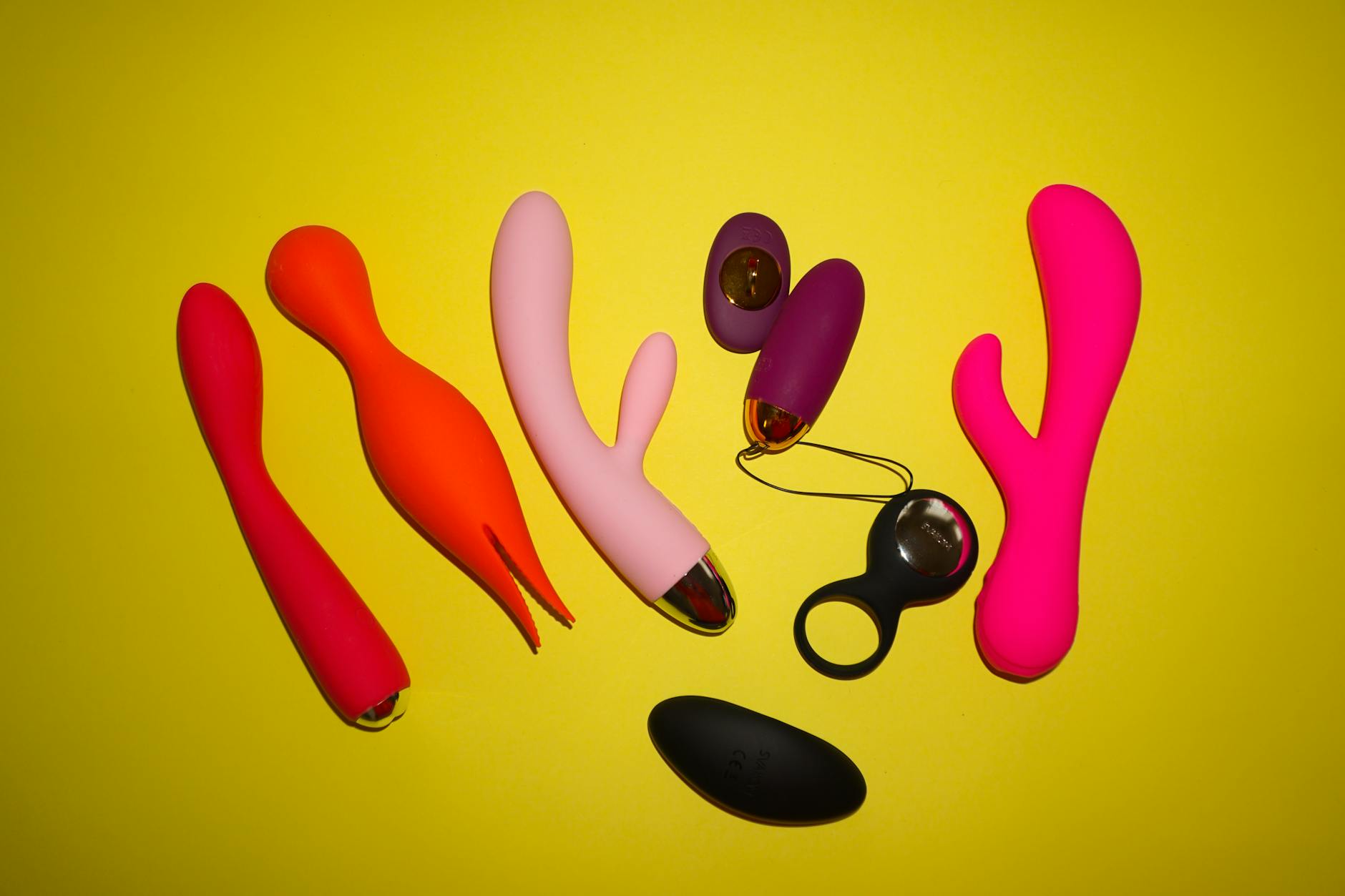 Photo by FounderTips on Pexels
The specific mechanics that help
Take the lemon sucker design. It works through gentle air-pulse stimulation, not vibration. That distinction is huge for couples with different arousal patterns.
If one partner takes 15 minutes to get aroused and the other takes 3, traditional vibrators create a wait time that breeds resentment. But a lemon clitoral vibrator doesn't require both people to sync up. One person can start, build, and finish while the other person is present in completely different ways.
The lower-libido partner might:
- Use the lemon vibrator solo while their partner watches (rekindling eroticism without pressure)
- Use it together as foreplay that doesn't have to lead to sex
- Take a turn with it while the higher-libido partner provides touch or presence
- Help their partner orgasm quickly, then cuddle, without feeling obligated to continue
Each of these removes the "keep up or get out" tension that kills intimacy.
Before you bring this home
Don't surprise your partner with a lemon vibrator. Don't leave it on the nightstand as a hint. Don't frame it as "maybe this will fix us."
Instead, have the conversation first. And make it about curiosity, not desperation.
"I've been thinking about how we've been struggling with timing, and I don't think it's about how much you love me. I think our bodies just operate on different schedules. Would you be open to exploring that together? I found something that might let us both experience pleasure without the usual pressure."
That's it. No apologies. No "I know you're not as interested." No shame.
Some partners will say yes immediately. Some will need time to think. Some will say no, and that's information too. It might mean they're not actually ready to address the mismatch, or they have other concerns that a lemon vibrator won't touch.
What to actually expect
A toy won't create desire where none exists. But it can create space for desire to emerge.
If your partner has been touched-out, pressured, or resentful about sex, the first month of introducing a lemon clitoral vibrator might not feel magical. They might still feel defensive. They might worry you're using it as a substitute for connection. These are real concerns that deserve a real conversation.
What does usually shift: the frequency of non-sexual touch increases. The person using the vibrator often feels less desperate, which paradoxically makes them sexier and more present. The partner starts to relax because there's no longer an unspoken demand hanging over every moment together.
Then, sometimes, things thaw.
The harder conversation you also need
Honestly, here's where couples get stuck. They get the lemon vibrator, it helps temporarily, and then they avoid talking about the actual mismatch.
Long-term, you both need to know:
- Is the lower libido physical (hormones, medication, fatigue, pain, numbness)? If so, is it worth exploring with a doctor?
- Is it emotional (resentment, disconnection, stress about the relationship)? That needs therapy or couples work.
- Is it just a baseline difference in desire? That's real, and it doesn't mean anyone's broken, but you need a sustainable way to handle it as a couple.
Lemon adult toys are helpful. They're not a substitute for addressing what's actually happening beneath the mismatch.
When to involve a professional
If the gap is wider than usual, consider couples therapy. A good therapist helps you separate the sex conversation from the intimacy conversation from the deeper resentment conversation. These three things are usually tangled, and a lemon vibrator can't untangle them.
Also consider it if one partner feels coerced or pressured, or if the mismatch is paired with other relationship tension. A toy can be a tool for reconnection, but it's not a substitute for actual repair work.
The part that actually matters
Mismatched libidos aren't a failure. They're normal. Most couples experience it at some point, and many experience it chronically.
What separates couples who stay connected from couples who drift is this: the higher-libido person stops making sex a demand, and the lower-libido person stops making desire a goal they can't meet. Both people accept that their bodies are different and get curious about how to work with that.
A lemon clitoral vibrator is one tool in that toolkit. It's not the only one. But it's a smart one, because it lets pleasure be about sensation and exploration instead of performance and obligation.
Your libidos might never match. But your intimacy can still be alive.
People also ask
Can a lemon vibrator really bridge a libido gap, or is that overselling it?
A vibrator alone won't fix a libido mismatch. But it can change the dynamic by removing pressure and creating new ways to experience pleasure together. The real bridge is communication plus willingness to adapt. If both partners are genuinely committed to staying intimate despite different desire levels, a lemon vibrator becomes a practical tool, not a magic fix.
What if my partner refuses to use a vibrator with me?
That's important data. It might mean they're not ready to address the mismatch yet, or they have deeper concerns (shame, pressure, past experiences). Don't push. Instead, ask what specifically feels uncomfortable. Is it the object itself, the conversation about sex, the feeling of being pressured, or something else? That conversation will tell you what actually needs attention.
Should the lower-libido partner be the one using the lemon vibrator?
Not necessarily. Sometimes the higher-libido partner using it alone, with their partner present, actually builds more connection because there's no expectation on the partner to perform or be aroused. Other couples enjoy exploring together. There's no "should" here. What matters is that you both feel willing and curious.
Does using a toy make sex feel less intimate if libidos don't match?
Actually, the opposite often happens. When one person isn't worried about keeping up or performing, everyone relaxes. That breathing room usually makes sex feel more intimate, not less, because it's no longer a chore someone's enduring for their partner's sake.
How do I bring up lemon vibrators without my partner feeling like I'm criticizing their libido?
Frame it around your own pleasure and curiosity, not their shortcomings. "I've been thinking about trying something new for me, and I'd like to share that with you if you're interested" is very different from "I bought this because you don't want sex enough." Own your desire without making their lack of it the problem.
What if the mismatch is because my partner takes antidepressants?
This is incredibly common and worth a separate conversation with their doctor. Some medications tank libido in a way that no toy will solve. Your partner might need to adjust meds, timing, or dosage in conversation with their prescriber. A lemon clitoral vibrator can help in the meantime, but the root issue might be medical, and that's worth addressing directly rather than working around it forever.
Mismatched libidos don't have to mean disconnection. They just mean you need to get creative, honest, and willing to explore beyond the standard template of what sex is supposed to look like. A lemon vibrator is one way to start that conversation. The willingness to listen to your partner is everything else.