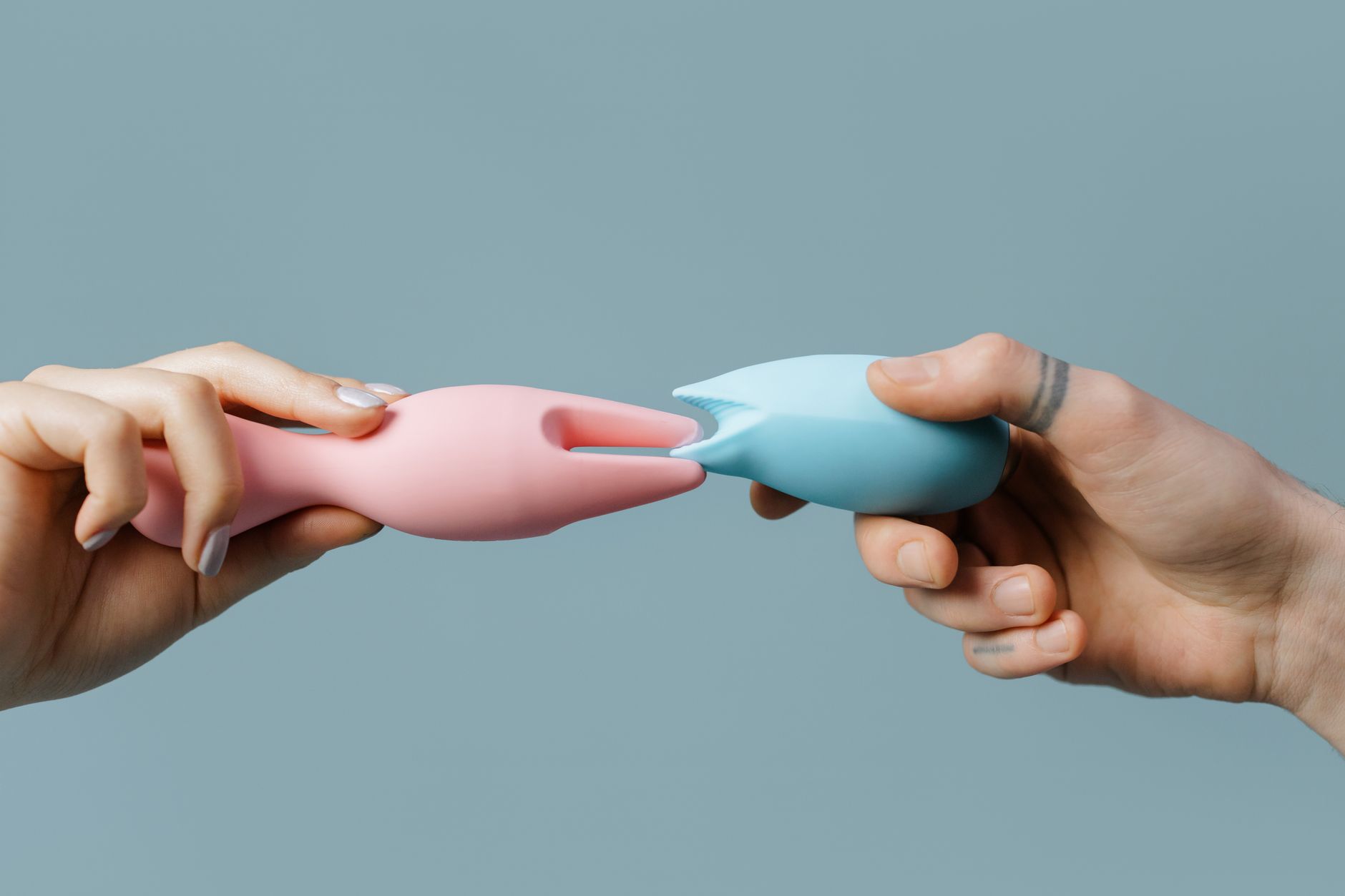
When desire just stops showing up
Let's be real. Years of low libido don't feel like a phase. They feel like a personality change. You wake up one day and realize you haven't thought about sex in months. Not because you're depressed (though maybe you are). Not because you hate your body (though maybe you do). But because somewhere between the burnout, the kid schedules, the financial stress, and the general heaviness of existing, your brain decided pleasure was a luxury it couldn't afford.
Here's the thing nobody tells you: that shutdown is actually protective. Your nervous system didn't abandon desire to punish you. It just put it on pause while you survived.
The good news is that desire doesn't disappear. It hibernates. And the right tool, at the right moment, can actually wake it back up.
Why low libido lasts so long
Your brain, your hormones, and your body all talk to each other. When stress stays high for years, your system stops prioritizing pleasure signaling. Cortisol (the stress hormone) suppresses dopamine and testosterone. Your pelvic floor tightens protectively. Your clitoris basically goes quiet.
But here's what most people get wrong: they think the fix is relaxation. "Just destress," people say. "Take a bath. Light candles." And yeah, those things help. But they don't directly rewire the neural pathways that connect sensation to pleasure.
What does is stimulation. Specifically, the kind that bypasses the thinking brain and talks directly to your nervous system.
Why lemon vibrators work differently than traditional tools
Most vibrators work through vibration alone. Your brain has to register that vibration, interpret it as pleasurable, and then activate arousal. When you've had years of low libido, that neural pathway is basically asleep. Vibration alone often feels like nothing.
Lemon clitoral vibrators work through suction and pulsing patterns. Suction creates a unique sensory experience that doesn't require you to be aroused first. It works on your body's reflexive nervous system, not your conscious brain. That matters enormously when desire has been offline for years.
The other difference is variability. A lemon clitoral vibrator has multiple intensity levels and pulsing patterns. Your nervous system wakes up faster to novelty. It's not the same sensation every time, which keeps your body engaged and curious instead of numb.
The first month: what actually changes
Week one is usually not explosive. You might feel something. You might feel nothing. That's normal. Your body is remembering what pleasure feels like, and memory takes time.
Week two is often weird. Sensations might feel intense or strange or almost uncomfortable. That's also normal. You're reactivating nerve pathways that have been quiet. It can feel unfamiliar.
Week three is usually when something shifts. Not a dramatic orgasm necessarily. But a moment where you feel actual interest. Where your body is curious instead of numb. Where you think about pleasure once during the day without forcing it.
By week four, most people report that their baseline arousal is slightly higher. Not constant. Just higher than it was. And that matters because it's the start of momentum.
Making it actually happen: practical steps
First, set expectations correctly. You're not trying to have your best orgasm ever. You're trying to wake your nervous system up. That's the whole goal for months one and two.
Second, remove the pressure. If you have a partner, tell them explicitly: "I'm rebuilding my own desire first. Nothing is about you. Nothing is about us. I'm just reconnecting with my own body." That conversation alone often reduces the shame spiral that keeps libido suppressed.
Third, create a small consistent ritual. Not a whole production. Just fifteen minutes, maybe once or twice a week, where you use your lemon vibrator with zero expectations. Dim lighting helps. Being alone helps. But the key is consistency, not conditions.
Fourth, go slower than you think you need to. Start on intensity level one. Stay there for multiple sessions. Your nervous system relearns gradually, not dramatically.
The emotional piece (which is actually bigger)
Here's what I see most often in my practice: the body rebounds faster than the mind does. You'll notice physical sensation returning before you feel emotionally ready for sex or intimacy. That gap is important. Don't rush it.
Years of low libido often comes with shame. You've disappointed a partner, or yourself, or both. You've made yourself smaller. That emotional weight doesn't lift because you bought a lemon clitoral vibrator. It lifts because you start proving to yourself that your body is still capable of pleasure.
That proof changes everything. It's not intellectual. It's felt. And once your body knows it can feel again, the emotional walls come down much faster.
When to expect real momentum
Most people see a genuine shift in baseline desire around month three. Not constant arousal. But moments of actual interest happening naturally, without forced focus.
By month four or five, many report that they're initiating desire again. Not necessarily partnered sex. Just wanting their own pleasure. That's the real marker of recovery.
Some people take longer. Six months, a year. That's fine. The timeline is less important than the direction. As long as sensation and interest are moving upward, you're rebuilding.
What to do if sensation still feels stuck
If you're six weeks in and feeling nothing, a few things to check.
First: Are you actually using your lemon vibrator consistently? "Sometimes when I think about it" doesn't rewire your nervous system. Twice a week minimum creates change. Once a week keeps it stable.
Second: Is there a deeper depression or hormonal issue? Low libido sometimes signals thyroid problems, vitamin deficiency, or clinical depression. If you're also exhausted, brain-foggy, or emotionally flat, see your doctor. You might need support beyond pleasure tools.
Third: Is there unresolved relational trauma or pain during sex? Pain during sex or pelvic tension might benefit from professional support. Sometimes the body shuts down desire because past experiences taught it that sex isn't safe. A lemon vibrator helps, but you might also need a therapist.
How this connects to long-term intimacy
Rebuilding your own desire is not selfish. It's foundational. A partner can't resurrect what you've abandoned. But you can lead the way. Once you prove to yourself that pleasure is possible and safe, you actually become more available to intimacy, not less.
If you have a long-term partner, this is important: rebuilding solo desire first often makes coupled sex much better when you get there. You know what feels good. You know what your body needs. You can actually advocate for yourself instead of hoping someone else figures it out.
The bigger picture
Years of low libido is exhausting. It changes how you see yourself. It changes your relationships. And it can feel permanent in a way that nothing else does.
But desire is not lost. It's suppressed. And suppressed things can be reactivated. With time, consistency, and the right tool like a lemon clitoral vibrator, your nervous system can remember what it already knows: that pleasure is available, that your body is capable, and that you deserve to feel good again.
People also ask
How long does it actually take to rebuild libido with a lemon vibrator?
Most people notice some shift in sensation within three to four weeks of consistent use. Real changes in baseline desire and initiation typically show up around month three or four. But recovery isn't linear. You might have weeks where sensation feels alive and weeks where it's quieter. That's normal. The overall trajectory matters more than week-to-week fluctuation.
Is it normal to feel nothing the first few times I use a lemon clitoral vibrator?
Completely. When your nervous system has been in protection mode for years, it takes time to register new sensations as safe or pleasurable. Numbness in the first weeks is common and doesn't mean the tool won't work for you. Keep showing up consistently, stay patient, and let sensation gradually return.
Can I use a lemon vibrator if I'm on antidepressants that affect libido?
Yes, absolutely. Antidepressants can make sensation duller and arousal harder to access, but they don't block your ability to feel altogether. A lemon clitoral vibrator's suction-based stimulation often works well for people on SSRIs because it creates sensation without requiring arousal to happen first. The nervous system response is more immediate than traditional vibration.
Should I use a lemon vibrator alone or with a partner while rebuilding desire?
Start alone. Seriously. When you're rebuilding your own capacity for pleasure, partner presence adds pressure (even unspoken). Once you've spent a few months reconnecting with solo sensation, introducing a partner or partnered use becomes much more natural and less performative. That foundation matters.
What if I rebuild sensation but my desire for my partner specifically doesn't come back?
That's also important information. Sometimes low libido masks a relational issue. If you're excited about pleasure on your own but not with your partner, that's worth exploring with a therapist. Rebuilding desire is about reconnecting with your own body first. But if the reconnection doesn't translate to partnered desire, there might be something else that needs attention.
Can stress come back and suppress libido again after I've rebuilt it?
Yes. Desire is sensitive to chronic stress. But here's the difference: once you've proven to yourself that sensation and pleasure are possible, they come back much faster the next time you prioritize them. You're not starting from zero. You're starting from a place where you know it works. That knowledge changes everything.