Let's talk about what actually matters right now
A breakup rewires your nervous system. You lose the touch you expected, the rhythm of another person, the identity you held as part of a unit. Your body forgets how it felt to be wanted. And somewhere in all that loss, pleasure becomes complicated. It's not just about missing sex. It's about rediscovering that you can feel good on your own, that your desire hasn't been taken from you, that your pleasure belongs to you and only you.
That's where lemon vibrators come in. Not as a substitute for a partner. Not as a consolation prize. But as a genuinely useful tool for rebuilding the connection you have with your own body. I've worked with countless clients through breakups, and the ones who reestablished a solo pleasure practice recovered faster. They felt more confident. They set better boundaries in future relationships. They literally felt more alive.
Here's what I've learned works.
Why your body might feel foreign right now
Breakups don't just hurt emotionally. They hurt somatically. Your body was conditioned to respond to touch from a specific person. That person is gone. Your nervous system is confused.
At the same time, you might feel guilt or weird about solo pleasure. You might wonder if wanting this means you're "not actually heartbroken." You're not. Pleasure and grief aren't opposites. They exist together. Feeling good doesn't erase what you've lost. It reminds you that you still exist.
Lemon vibrators work so well in this context because they bypass the need to "perform" pleasure. With a partner, you might have held back, adjusted your pace, or stayed quiet. With a clitoral vibrator, you're the only audience. The lemon's suction patterns mean you can focus entirely on sensation without the friction-based intensity that sometimes triggers tension rather than release.
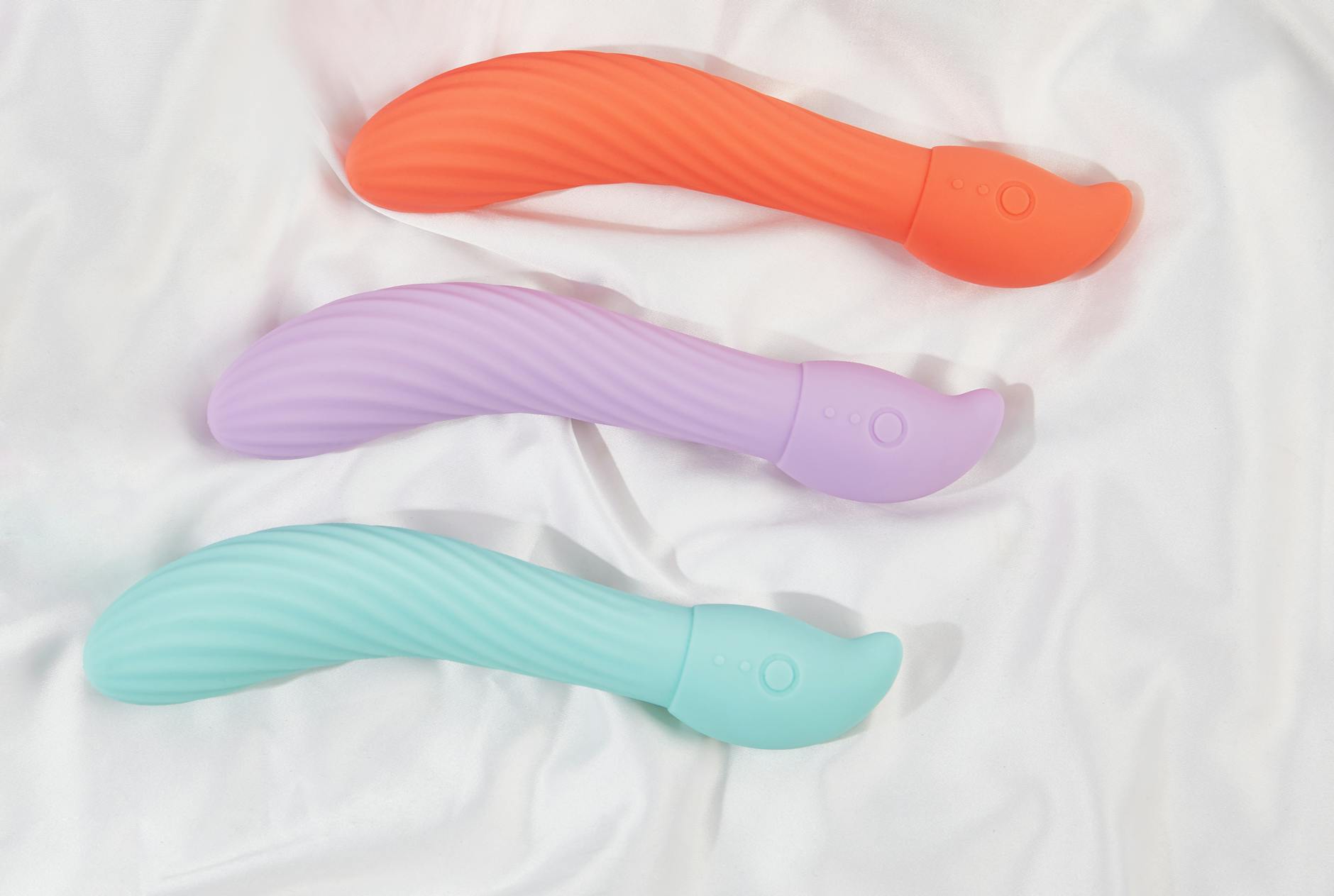
Photo by IFONNX Toys on Pexels
Starting when you're not sure you want to
You don't have to want pleasure immediately. Grief is not a linear process, and neither is rediscovering your body after loss.
But when you're ready, start small. That doesn't mean waiting for some perfect moment. It means removing pressure. Set aside maybe 30 minutes when you're not exhausted, not rushed, not "supposed to be" doing something else. You're not chasing an orgasm. You're exploring sensation.
The first time with a lemon vibrator after a breakup, many people use pattern 1 or 2. Low intensity. No goal. Just noticing what your body is telling you. You might feel numb. You might feel tender. You might feel surprisingly good. All of this is data, not judgment.
The suction action of lemon clitoral vibrators means you can control intensity without controlling friction. It's gentler on tissue that's been neglected or that's responding to emotion rather than just physical arousal. This matters more than you'd think.
Building confidence back into your body
One of the hardest parts of a breakup is the doubt that creeps in. What if nobody wants me? What if I'm broken? What if I don't work the way I used to?
Each time you have a solo experience with a lemon vibrator and feel pleasure, you're answering those questions with your nervous system, not your mind. Your body is working. Your desire is still there. You're still here.
After a few solo sessions, many clients report that they feel less desperate. Less like they need someone to "fix" them or make them feel alive. That shift is powerful. It's not about being content alone forever. It's about knowing that your worth isn't tied to being wanted by one specific person. Your pleasure was never his to give or take away.
The practical setup that helps
Three things make a huge difference:
1. Lubrication. Grief, stress, and lack of recent sexual activity all reduce natural lubrication. Use a water-based lube with your lemon vibrator. Slick is better than friction-heavy right now.
2. Your physical space. You don't need candles and a mood board. You need a space where you won't be interrupted. Bedroom door locked. Phone in another room. Your nervous system needs safety to fully relax into sensation.
3. Zero expectation of outcome. You're not trying to have an orgasm. You're not trying to "prove" you still work. You're exploring. That's it. The moment you shift from exploration to performance, even solo performance, you lose the whole point.
Why lemon vibrators specifically help here
Traditional vibrators rely on friction and speed. They require your body to keep up with a fixed rhythm. After a breakup, when your nervous system is already overloaded, that can feel like demand rather than invitation.
Lemon vibrators use air-suction technology. The sensation feels less like buzzing and more like gentle pulling. It mimics a sensation your body might recognize but in a way that's more controlled and less overwhelming. Because you choose the intensity, you're in charge of the entire experience. That autonomy matters psychologically and physically.
Many clients tell me that with a lemon clitoral vibrator, they feel more in their body and less in their head. That's not coincidental. It's because the sensation is novel enough that your brain can't overlay old patterns onto it. You're forced to be present.
Moving forward without rushing
Here's what I tell clients who are worried they're using solo pleasure to avoid processing their breakup: you're not. You're processing it differently. Pleasure is one valid way to remind yourself that you're alive, that you have agency, and that your body still works. That's not denial. That's integration.
Solo pleasure after a breakup isn't a race. Some people feel ready after two weeks. Some take months. Both are fine. The only requirement is that it comes from you, not from a sense of obligation or pressure to "get over it."
When you do eventually meet someone new, you'll bring something valuable: the knowledge that you can feel good on your own terms. That changes everything about how you show up in a relationship. You're not there to be completed. You're there to connect with someone while remaining whole.
Your lemon vibrator isn't a Band-Aid on heartbreak. It's a tool for reconnection. With yourself first. That's where healing actually starts.
FAQ: Solo pleasure and moving through breakup
How long should I wait after a breakup before using a vibrator?
There's no rule. Some people need space first. Some find that reconnecting with physical pleasure actually helps them process emotions faster. Listen to your own timeline, not someone else's. When you feel curious rather than desperate, you're probably ready.
Can using a lemon vibrator solo make it harder to be with someone new?
Actually the opposite. People who maintain a solo pleasure practice often have healthier partnered sex because they know what they like, they're not dependent on a partner for pleasure, and they approach sex as something they genuinely want rather than something they need. That's attractive and functional.
Will a lemon vibrator feel intense after not having sex for a while?
Not necessarily. Lemon vibrators offer precise control. Start on the lowest setting and increase only if you want to. Many clients find that the gentler, non-traditional sensation of air-suction vibrators feels more accessible than traditional vibrators when their body is sensitive or grief-heavy.
What if I use my lemon vibrator and feel sad instead of good?
That's completely normal. Pleasure can crack open emotions. Your body might release grief that you didn't know you were holding. That's not failure. That's the vibrator working as intended, helping you reconnect with sensation and all the feelings attached to it. Let it happen. Cry if you need to. Then try again another time.
Is solo pleasure with a lemon clitoral vibrator different from what I did with my ex?
Completely. You're not performing. You're not calibrating to someone else's pace. You're not managing their pleasure alongside your own. You get to be entirely selfish with your sensation. That's the whole point. It's as different as a conversation alone versus in a room full of people.
How do I know if I'm using pleasure to avoid processing my breakup?
You're avoiding if you're using pleasure to numb out, to escape thinking about the breakup, or to feel wanted. You're processing if you're using pleasure to reconnect with yourself, to remind yourself you're alive, and to explore what feels good on your own terms. The difference is in intention. One feels like running from something. The other feels like running toward yourself.