The thing nobody tells you about long-term relationships
Somewhere between year three and year ten, sex stops being exploration and becomes infrastructure. You know what your partner likes. They know what works for you. The whole thing runs on muscle memory, which sounds efficient until you realize you're not actually present anymore.
Here's what I see in my practice: couples don't lose desire because passion burns out naturally. They lose it because they stop taking risks together. Introducing something new, like lemon vibrators or any clitoral vibrator, forces you back into vulnerability. That vulnerability is where emotional reconnection lives.
Why lemon vibrators work differently for couples
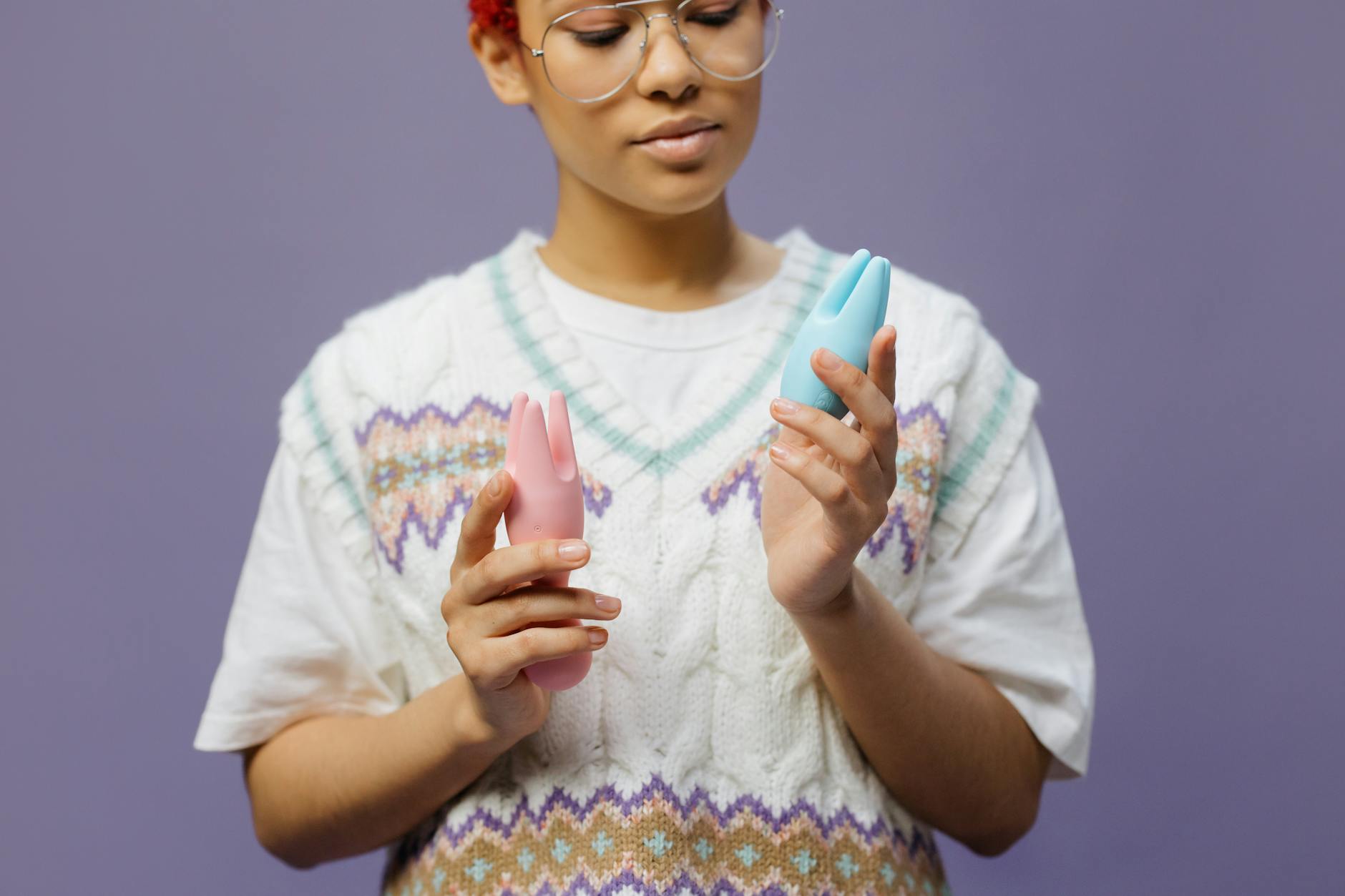
There's a practical reason lemon vibrators (and our other Hello Nancy clitoral vibrators) shift the dynamic in long-term relationships. Unlike traditional vibrators that can feel utilitarian or awkward to integrate, the sensation of lemon vibrators is different enough that it requires communication. You have to tell your partner what you're feeling. You have to slow down and pay attention together.
When you're using a lemon clitoral vibrator with a partner for the first time, you're essentially agreeing to a new shared language. They're watching you respond to something novel. You're experiencing pleasure in a way they haven't necessarily seen before. That mutual newness is what creates the emotional opening.
The lem vibrator, our flagship design, produces a specific suction-based sensation that doesn't require heavy friction. For couples, this matters because it shifts the focus from performance ("am I doing this right?") to presence ("what are we discovering together?").
How to introduce it without awkwardness
The worst mistake couples make is treating the conversation like a performance review. Don't say, "I want to use a vibrator because you're not doing enough." That's armor, not invitation.
Instead, frame it as curiosity: "I've been reading about how lemon vibrators work differently, and I'm curious what it feels like. Would you want to try it together?" This pulls your partner into discovery mode, not defense mode.
Second, do the actual intro outside the bedroom. Show them the toy. Let them hold it. Talk about it when you're clothed and eating breakfast. Remove the shame-laden secrecy that makes it feel transgressive.
Third, agree on a first experience. Say something like: "Let's just spend time with this and see what happens. No pressure to orgasm or perform. Just exploration." This resets expectations from "Does this make sex better?" to "What's this like?" A completely different question.
The emotional work that happens during use
When you're in bed with a partner and introducing a lemon vibrator, something shifts in the nervous system. You have to ask for what you want. You have to say things like, "That feels good" or "Can you angle it differently?" or "I need you to go slower."
These are the conversations that rebuild intimacy in long-term relationships. Not grand gestures. Small, specific feedback about pleasure. Over time, that kind of communication bleeds into other parts of the relationship. You get better at asking for what you need in general.
For partners who aren't the one using the lemon clitoral vibrator, the shift is equally important. You're no longer responsible for being the sole source of your partner's pleasure. That sounds like a loss, but it's actually a relief. You get to watch. You get to pay attention. You get to be part of something without carrying the weight of performance.
Practical setup for reconnection
Here's what I recommend to couples who want to use lemon vibrators as a reconnection tool rather than just a pleasure device.
First, create time for it. Not spontaneous. Scheduled. Block out an hour on a Saturday morning or whenever you both have space. Anticipation rebuilds desire in long-term relationships because it gives your brain time to reset expectations.
Second, start with extended foreplay. Spend 20-30 minutes on kissing, touch, and conversation before the lemon vibrator enters the picture. This matters because you're priming your nervous systems toward presence, not rushing toward orgasm.
Third, use it as part of a larger experience, not the whole thing. The lem vibrator works beautifully as a tool for 10-15 minutes mid-session, not as a 45-minute solo event. This keeps the focus on partnership rather than the toy itself.
Finally, talk about it afterward. Not a clinical debrief, but genuine curiosity. "That felt different." "I noticed you responded faster." "I liked watching you." These small observations strengthen the emotional data you have about each other.
The communication shift that changes everything
I've worked with couples who've been together 15, 20, 25 years. The ones who maintain real desire don't do anything extraordinary. They maintain curiosity. They stay willing to not know everything about their partner.
Introducing lemon vibrators or any new tool is a way to deliberately practice that willingness. You're saying, "I don't have all the answers to your pleasure. Let's figure it out together."
For partners who struggle with feeling left out or insecure, lemon clitoral vibrators can actually help. Because you're involved. You're learning. You're part of the discovery. This is fundamentally different from the partner secretly using a toy alone, which feels like exclusion.
The emotional reconnection doesn't come from the vibrator itself. It comes from the communication that the vibrator requires.
When lemon vibrators unlock deeper conversations
Sometimes introducing a new tool like a lemon vibrator opens a door to larger conversations that long-term couples need to have anyway. "I've been wanting more frequent sex," or "I need more verbal affection," or "I miss the way you used to touch me."
The vibrator becomes a symbol that invites honesty. It says, "We're allowed to want things. We're allowed to try things. We're allowed to not know the answer." That permission extends beyond the bedroom.
If deeper issues emerge (resentment, disconnection, infidelity concerns), a vibrator is not the solution. Those situations need a couples therapist or counselor. But for couples who have a solid foundation and just need to rebuild spark, the simple act of shared exploration with lemon vibrators can shift the entire dynamic.
The timeline to expect
Don't expect one experience with a clitoral vibrator to reignite a five-year dry spell. That's not realistic and sets you up for disappointment.
What you're building is a pattern. First time using the lem vibrator together: curiosity and maybe some awkwardness. Second time: less performance anxiety, more presence. Third, fourth, fifth time: genuine reconnection.
After regular use over a month or two, couples report that they initiate sex more often and feel more emotionally connected. Not because the vibrator is magic, but because they've practiced vulnerability and communication in a contained space, and those skills spill over.
FAQ: Common Questions About Lemon Vibrators and Couples
Will using a lemon vibrator make my partner feel inadequate?
Not if you frame it as addition, not replacement. A partner might feel insecure if you introduce a vibrator while implying they're not enough. But if you say, "I want to explore this with you," and they're involved, most partners feel included. The vibrator becomes a shared tool, not a judgment.
Can we use a lemon clitoral vibrator during penetrative sex?
Yes, though it depends on the position and comfort level. Many couples find it works best during foreplay or as a standalone experience within a larger encounter. Read more about the specifics in our guide on can you use lemon vibrators during penetrative sex.
How do I talk to my partner about wanting to try lemon vibrators if they've said no in the past?
Don't push. Instead, drop the topic for three months, then revisit it in a completely different way. Maybe show them an educational article or a brand like Hello Nancy that frames it as relationship-building rather than sex-fixing. Sometimes a different presentation lands better than a repeat of the same conversation.
Will lemon vibrators help if my partner has low desire?
Not directly. If your partner has low libido or desire issues, a new toy won't fix that. But it can be part of a larger conversation about reconnection. Learn more about how to use lemon vibrators if you have low libido and consider whether there are deeper issues that need professional support.
What if we try lemon vibrators and it feels awkward or uncomfortable?
Completely normal. You're trying something new in a vulnerable space. Give it three separate attempts before deciding it's "not for you." Often the third time feels dramatically different from the first. But if you're both genuinely uncomfortable, that's real data too. Some couples just don't connect with vibrators, and that's okay.
How often should we be using lemon vibrators to actually rebuild intimacy?
There's no magic frequency, but consistency matters more than intensity. Once a week for a month creates more emotional shift than three times in one weekend. The lemon clitoral vibrator becomes a ritual, something you both anticipate and prepare for. That anticipation is where the actual reconnection happens.
The long view
Honestly, lemon vibrators aren't a fix for broken relationships. They're a tool for couples who have something worth rebuilding and are willing to show up vulnerably together. If you're using them to avoid deeper conversations or as a Band-Aid on serious disconnection, they won't work.
But if you're a couple who loves each other and just needs permission to be curious again, they can shift everything. Not because of the sensation, but because of what using them together requires: honesty, communication, and a willingness to not know everything about your partner.
That's where emotional reconnection lives.